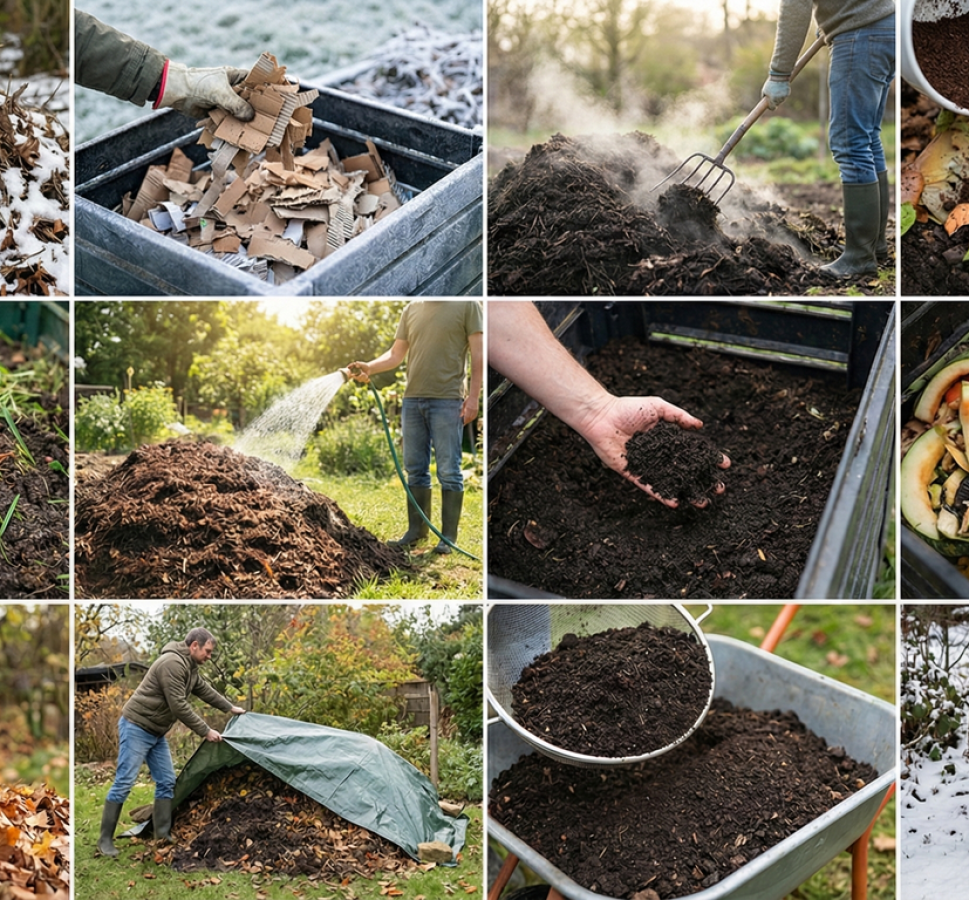
Composting What to Do Each Month: Successful composting isn’t a set-it-and-forget-it process—it’s a living ecosystem that responds to seasonal changes throughout the year. Understanding what to do each month ensures your compost pile remains active, healthy, and productive regardless of weather conditions. This comprehensive monthly guide will help you maintain optimal decomposition year-round, transforming kitchen scraps and yard waste into nutrient-rich soil amendment for your garden.
Whether you’re a beginner starting your first compost pile or an experienced composter looking to optimize your process, following a monthly maintenance schedule ensures consistent results. Each season brings unique opportunities and challenges, from winter’s slow decomposition to summer’s accelerated breakdown. By adapting your approach month by month, you’ll produce high-quality compost while minimizing common problems like odors, pests, and stalled decomposition.
January and February: Winter Maintenance
Winter months present the greatest challenge for composting as cold temperatures dramatically slow microbial activity. However, with proper management, you can keep your pile working even when temperatures drop below freezing. The key to winter composting success lies in insulation and strategic material placement.
During January and February, focus on insulating your compost pile to retain heat. Add a thick layer of straw, dried leaves, or wood chips around the exterior—at least six inches deep—to create a protective barrier. This insulation helps maintain a stable internal temperature where decomposition can continue, albeit at a slower pace. Your pile may not feel hot to the touch, but if properly insulated, the center should maintain temperatures between 90 and 110 degrees Fahrenheit.
Composting What to Do Each Month: continue adding kitchen scraps throughout winter, but place them directly into the center of the pile where heat is greatest. Chop materials into small pieces to accelerate breakdown despite the cold. Mix fresh scraps with dry brown materials—the leaves you stockpiled in fall become invaluable now. Avoid turning your pile frequently during these months, as each turn releases valuable heat. Monthly turning at most is sufficient, and choose the warmest part of the day for this task.
March and April: Spring Awakening
As temperatures climb above 50 degrees Fahrenheit, your compost pile awakens from winter dormancy. March and April represent the perfect time to reactivate your pile and prepare for the abundant growing season ahead. Microbial populations multiply rapidly as soil warms, accelerating decomposition rates significantly.
Remove winter insulation in late March or early April once nighttime temperatures consistently stay above freezing. Assess your pile’s moisture level—if it dried out over winter, add water while turning to achieve the consistency of a wrung-out sponge. Spring marks an excellent time to start a new pile if yours has finished decomposing, or to turn and aerate an existing pile thoroughly.
Take advantage of spring yard cleanup by adding fresh green materials like grass clippings, early weeds, and garden trimmings. Balance these nitrogen-rich greens with carbon materials at a ratio of approximately two to three parts brown to one part green. Resume weekly turning to introduce oxygen and distribute moisture evenly. If your pile stalls below 100 degrees Fahrenheit, add nitrogen-rich materials like coffee grounds or fresh grass clippings to boost microbial activity. Spring’s moderate temperatures create ideal conditions for rapid decomposition—properly managed piles can produce usable compost in as little as three to four weeks.
May and June: Peak Growing Season
May and June bring abundant organic material as gardens burst into growth. This period offers the perfect opportunity to build substantial compost piles that will be ready for fall planting. With warm temperatures and plentiful materials, your composting system can work at maximum efficiency.
Capitalize on the abundance by layering nitrogen-rich garden trimmings with carbon materials. Chop larger plant material into pieces under two inches to dramatically reduce breakdown time. Regular mowing provides steady supplies of grass clippings—excellent nitrogen sources when mixed properly with browns to prevent matting and odors. Continue weekly turning to maintain optimal oxygen levels and even decomposition.
Monitor moisture carefully as late spring temperatures rise. If your pile begins to dry out, water it thoroughly while turning. The combination of warmth and moisture creates ideal conditions for rapid decomposition. Your pile should reach peak temperatures between 140 and 160 degrees Fahrenheit—hot enough that the surface feels warm to the touch. At these temperatures, decomposition happens quickly while also killing weed seeds and potential pathogens. Consider starting a second pile in June so you’ll have finished compost available year-round.
July and August: Summer Heat Management
Summer’s intense heat accelerates decomposition but requires vigilant moisture management. July and August challenge composters to maintain proper water levels as high temperatures can quickly dehydrate piles, halting the decomposition process entirely. Success during these months depends on balancing heat, moisture, and aeration.
Check your pile’s moisture level daily during hot weather. Stick your arm deep into the pile—if the material feels dry or crumbly, add water immediately. Water thoroughly while turning to ensure moisture reaches the pile’s center. During drought periods, water every three to four days with two to three gallons per cubic yard. Create a shallow depression in the pile’s top to capture rainwater naturally.
Monitor internal temperatures closely with a compost thermometer. Summer piles often exceed 160 degrees Fahrenheit, which can kill beneficial microorganisms. If temperatures climb above this threshold, turn the pile immediately to release excess heat and prevent beneficial microbe die-off. Add more brown materials and increase moisture if overheating persists.
Consider positioning shade cloth or temporary panels to protect your pile from constant sun exposure. However, don’t completely block airflow—proper ventilation remains crucial. Continue adding summer garden waste, but avoid overwhelming your pile with fresh grass clippings, which can create anaerobic pockets. Mix clippings with dry materials immediately upon adding. With proper moisture management, summer piles decompose two to three times faster than during cooler months.
September and October: Fall Preparation
Fall may be the ideal time to start composting or refresh existing piles. September and October provide abundant carbon-rich materials from autumn leaf drop, making it easy to stockpile browns for winter use. Moderate temperatures support steady decomposition while cooler nights signal it’s time to prepare for winter dormancy.
Collect and shred fallen leaves before adding them to your compost pile. Shredding prevents matting and accelerates decomposition significantly. Layer leaves with nitrogen-rich materials like late garden trimmings, grass clippings, and kitchen scraps at a ratio of three parts brown to one part green. Store extra leaves in bags or bins—you’ll need these carbon sources throughout winter when browns become scarce.
As you clean up summer gardens, add expired vegetable plants and annual flowers to your pile. Pull these plants when they stop producing but before cold kills them, as this interrupts pest and disease cycles. Remove any diseased or pest-infested plants and bag them separately—seal tightly and place in the sun for several days before composting to kill mobile insects.
Composting What to Do Each Month: Turn your pile every two weeks during fall to maximize decomposition before winter arrives. Ensure proper moisture levels, especially during fall rains—if your pile becomes waterlogged, add more dry leaves and turn frequently. Cover your pile with a tarp during heavy rain to prevent oversaturation while still allowing airflow. By late October, reduce turning frequency to monthly as temperatures drop. Harvest any finished compost from the bottom of your pile and store it protected from rain, ready for spring planting.
November and December: Winter Preparation
As winter approaches, November and December require strategic preparation to ensure your pile survives the cold months. While composting slows dramatically during winter, proper setup now prevents complete dormancy and positions your pile for spring reactivation.
Finalize your winter insulation strategy by building up the pile’s volume. Larger piles retain heat better than small ones—aim for at least three cubic feet (three feet in each dimension). Add extra brown materials around the outside to create natural insulation. Position your pile to take advantage of southern exposure and protection from harsh winds if possible.
Make final adjustments to moisture levels before the ground freezes. Your pile should be consistently moist but not waterlogged. Excess moisture will freeze, while too-dry material won’t decompose. Check moisture at various depths and add water if needed during the last warm days of November.
Continue adding kitchen scraps throughout December, but reduce turning to preserve heat. Consider keeping a covered bucket near your pile where you can dump scraps without uncovering the entire pile each time. During occasional warm spells, you can turn the pile and incorporate these scraps into the center. Store a supply of dry leaves near your pile for mixing with winter kitchen scraps—the carbon helps absorb excess moisture and maintains proper ratios even when fresh brown materials are unavailable.
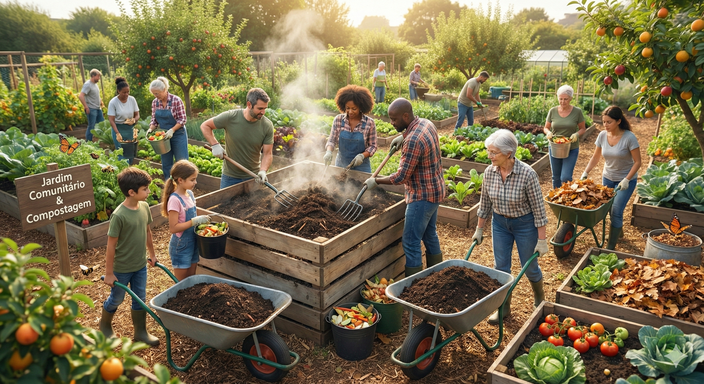
Composting What to Do Each Month: Year-Round Success Tips
Successful composting throughout the year requires attention to three fundamental principles: proper carbon-to-nitrogen ratios, adequate moisture, and sufficient oxygen. While the specific tasks change monthly, these core principles remain constant. Maintain approximately two to three parts carbon (browns) to one part nitrogen (greens) by volume. Keep your pile as moist as a wrung-out sponge. Turn regularly to introduce oxygen and prevent anaerobic conditions.
Invest in a compost thermometer to monitor internal temperatures throughout the year. Temperature provides crucial feedback about your pile’s health and activity level. During active decomposition, temperatures should range between 130 and 150 degrees Fahrenheit. Temperatures that stall below 100 degrees signal the need for more nitrogen, while those exceeding 160 degrees require immediate cooling through turning and moisture addition.
Composting What to Do Each Month: Keep detailed records of what you add and when. Note temperature readings, turning dates, and any problems encountered. This information helps you learn your pile’s patterns and make adjustments for better results. Remember that even perfectly maintained piles may take three to four months to produce finished compost, though hot composting can reduce this to three to four weeks under ideal conditions.
Composting What to Do Each Month: |zTroubleshooting Common Issues
Odor problems typically indicate imbalances that vary seasonally. During spring and summer, foul smells usually result from excess moisture and nitrogen—add more browns and turn weekly. Fall’s wet leaves can create anaerobic conditions—mix in coarse materials like small twigs for better airflow. Winter odors often mean food scraps are freezing rather than decomposing—try burying additions deeper in the pile’s center where heat remains.
Pest challenges shift with seasons and reproduction cycles. Spring attracts egg-laying insects—bury food scraps eight to twelve inches deep and maintain proper carbon-nitrogen ratios. Summer heat brings rodents seeking food and shelter—avoid adding meat, dairy, and oils while securing bin edges with quarter-inch hardware cloth. Fall leaf collection may introduce slugs and beetles—incorporate dry materials gradually and turn frequently. Winter pests are minimal, but ensure your bin remains secure against hungry rodents.
Conclusion
Composting What to Do Each Month: successfully throughout the year requires adapting your practices to each season’s unique conditions. By following this monthly guide, you’ll maintain healthy decomposition cycles and produce nutrient-rich compost consistently. Whether you’re managing winter’s cold, spring’s abundance, summer’s heat, or fall’s preparations, understanding what to do each month ensures composting success. Start implementing these practices today and watch your compost thrive through every season, transforming waste into black gold for your garden.
References
- United States Environmental Protection Agency. (2025). Composting At Home. Retrieved December 2025.
- Penn State Extension. (2025). Home Composting: A Guide for Home Gardeners. Pennsylvania State University.
- Arborist Now. (2025). Seasonal Composting Guide: Tips for Year-Round Success. Retrieved December 2025.
- Planet Natural Research Center. (2024). Composting Tips & Tricks. Planet Natural.
- FarmstandApp. (2025). 7 Seasonal Adjustments for Compost Management. Retrieved December 2025.