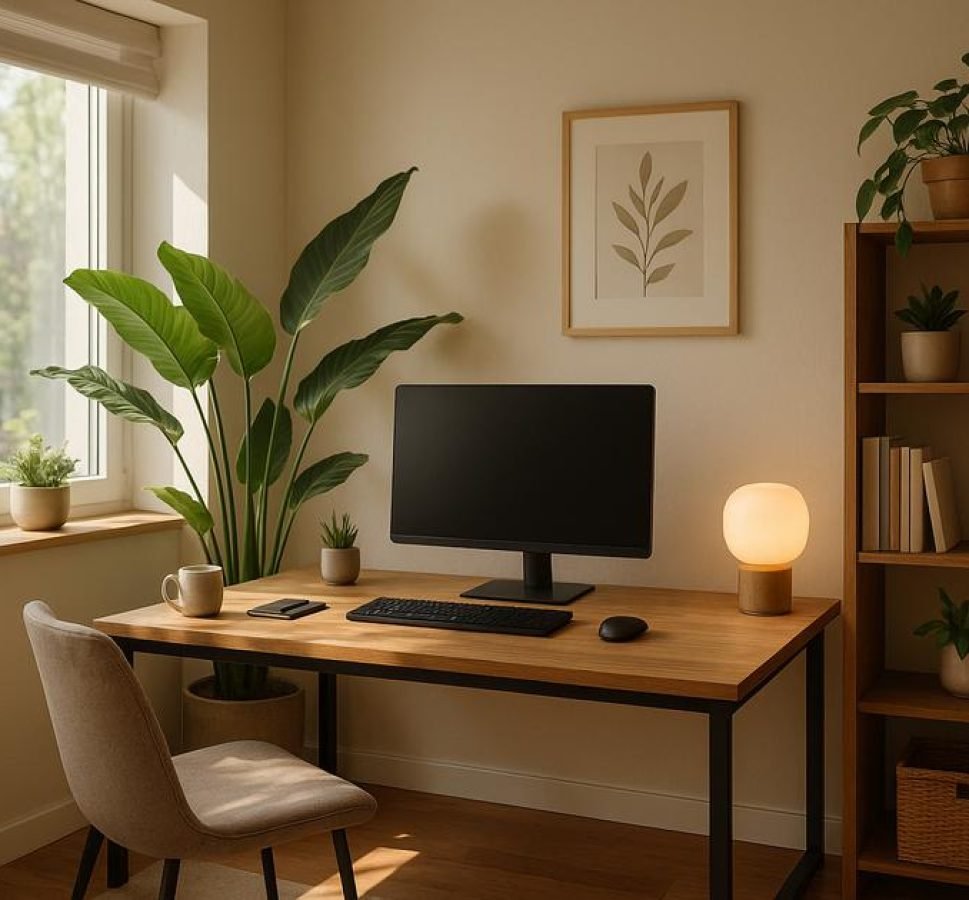
home office bookshelves styling can turn a bland wall into a productivity booster. Want easy changes you can do today? I share quick, low-cost swaps—color accents, plant placement and object grouping—that make shelves feel intentional and useful.
Choose a shelf layout that fits your workflow
Start by mapping daily tasks and where each item fits in your flow. Keep things you use most within arm’s reach of the desk. Place reference books and active tools on lower or middle shelves; reserve higher shelves for decorative or rarely used items.
- Define zones: active (daily tools), reference (books, binders), display (decor), and storage (boxes, archives).
- Prioritize reach: items used every day should sit 18–30 inches from the desk—easy to grab without standing.
- Match shelf depth to items: narrow shelves for paperbacks and files, deeper shelves for baskets or stacked boxes.
Quick layout patterns
Try one of these simple patterns to fit different workflows:
- Left-to-right workflow: incoming papers and active projects on the left, current work in the center, reference and inspiration on the right.
- Vertical stack: dedicate vertical columns to categories—files, books, decor—so each column has a clear purpose.
- Zoned islands: use a small shelf section for daily tools, a middle section for reference, and a top shelf for display to keep clutter off the desk.
Use baskets, vertical file holders, and labeled boxes to hide mess and keep similar items together. Add hooks or a small tray on the shelf edge for cables, headphones, and chargers so they don’t drift onto the desk.
Measure shelf heights before you buy or style. Leave 2–4 inches of breathing room above books and taller objects to avoid a cramped look. If you need flexibility, choose adjustable shelves or stackable organizers.
Finally, maintain one tidy shelf as a focal point with a small plant or object to keep the space calm. Rotate or replace one item each month to keep the layout fresh without overhauling your system.
Mix books and objects for balance, color and scale
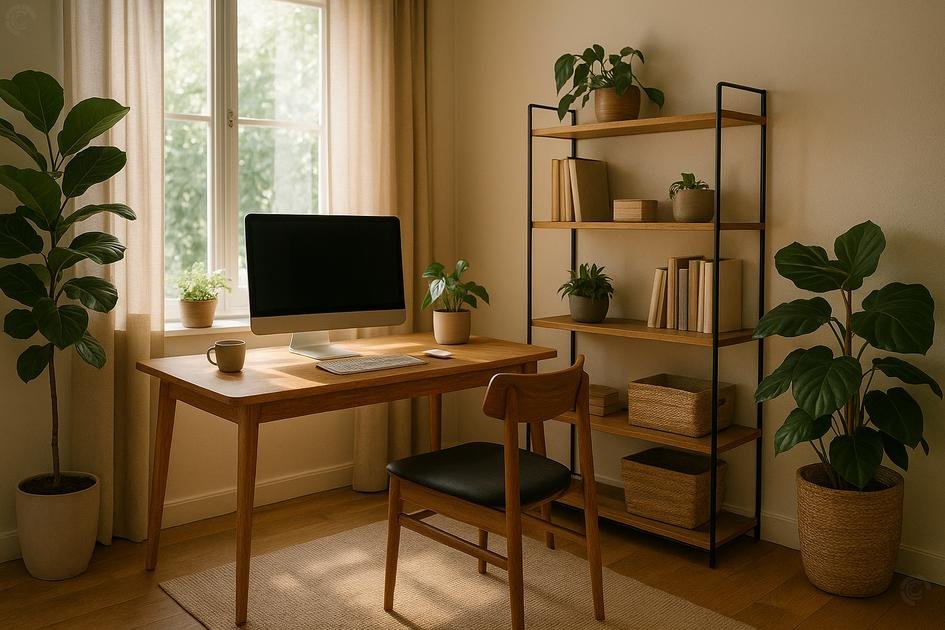
Mix books and objects to create a shelf that feels lived-in and intentional. Use simple swaps to control color, height, and visual weight so the eye moves smoothly across the shelf.
- Group in odd numbers: clusters of three or five items read as more natural than pairs.
- Vary scale: pair tall items with low stacks of books to create contrast and avoid a flat line across the shelf.
- Mix orientations: alternate vertical rows of books with horizontal stacks to add rhythm and provide platforms for small objects.
- Anchor with a focal piece: choose one larger item—like a vase or framed print—as an anchor for each section to ground the arrangement.
Color, texture and negative space
Limit the palette to two or three accent colors plus neutrals. Repeat those accents across the shelf to tie sections together. Add texture with a woven basket, ceramic piece, or a small planter to break monotony. Leave some open space so displays don’t feel crowded; negative space improves clarity and focus.
- Repeat color: echo a color from a book spine in a small object or plant pot for cohesion.
- Use texture: mix matte ceramics, glass, and natural fibers for depth.
- Keep breathing room: allow 1–2 inches around objects so each piece reads clearly.
For function, place frequently used books at reachable heights and decorative objects higher or off to the side. Rotate one item seasonally to refresh the look without a full restyle. Small, regular edits keep the shelf useful and attractive.
Use lighting, plants and texture to brighten the shelves
Brighten shelves by combining light, plants, and texture for a fresh, calm look. Small changes can boost mood and make items easier to find.
Lighting tips
- Layered lighting: use LED strip lights under each shelf plus one or two small puck lights to highlight display areas.
- Natural light: position shelves where daylight reaches them, but avoid direct harsh sun on delicate plants or paper.
- Warm bulbs and high CRI: choose 2700–3000K LEDs with CRI 90+ to keep colors true and cozy.
- Dimming and placement: add a dimmer or smart bulbs to control mood; point spotlights toward textured objects, not glossy surfaces.
- Hide cables: run thin LED strips along the back edge or inside trim to keep wiring invisible.
Plant placement and care
- Mix sizes: put small succulents up front, medium pots at eye level, and a taller plant like a snake plant on the floor or a lower shelf.
- Use trailing plants: pothos or string of hearts on higher shelves add vertical movement and soften hard lines.
- Choose low-maintenance species: ZZ plant, pothos, small succulents and cast-iron plants tolerate indoor light and infrequent watering.
- Pots and drainage: use pots with saucers or hidden liners to protect wood; place a tray under wet plants to catch spills.
- Rotate and prune: turn plants occasionally for even light and trim dead leaves to keep the shelf tidy.
Texture and spacing
Layer texture to add depth: woven baskets hide clutter, ceramic vases give weight, and cloth-covered boxes soften edges. Alternate smooth and rough surfaces and leave small gaps so each item stands out.
- Group by touch: pair a stack of books with a rough basket and a glossy ceramic object for contrast.
- Limit accents: stick to two or three accent colors and repeat them to tie the shelf together.
- Breathing room: leave 1–3 inches of negative space around groupings to avoid visual chaos.
Quick upkeep: dust shelves weekly, wipe light fixtures, and check plant soil every 1–2 weeks. Small rituals keep the display bright and functional.
Quick styling rituals to maintain a tidy, productive display
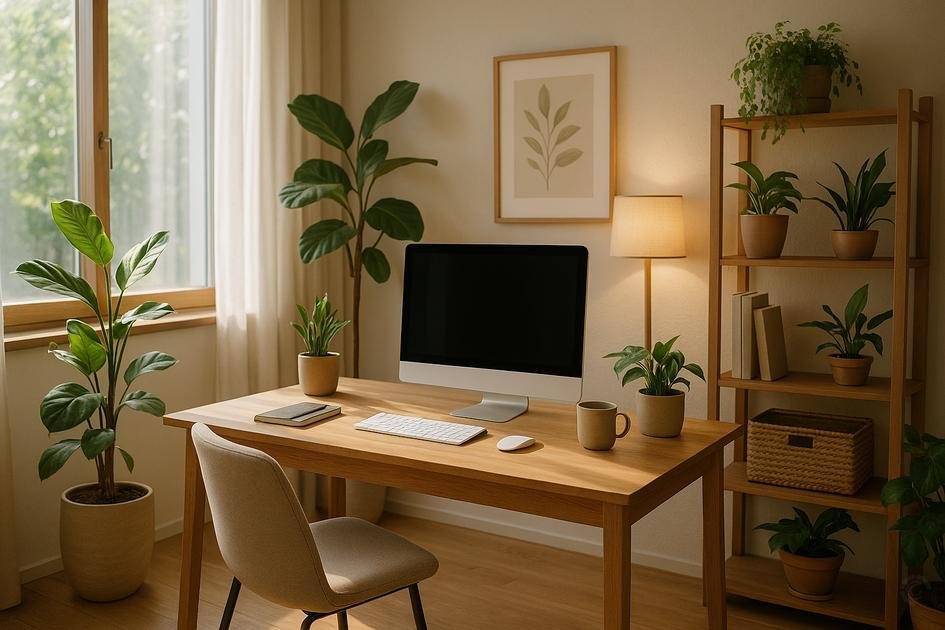
Set a short daily habit: a 2-minute tidy before you stop work. Put stray papers in a tray, return a mug to the sink, and place loose pens in a cup.
Weekly upkeep
- Dust and wipe: quickly dust shelves and wipe flat surfaces to keep the display bright.
- Reset zones: restore each zone—daily tools, reference, and display—so items sit where you expect them.
Monthly edits
- Cull and rotate: remove two items that don’t belong and swap one decorative piece to refresh the look.
- Check functionality: test drawer boxes, baskets, and file holders to ensure they still fit your workflow.
Use simple tools: a woven basket for loose items, a shallow tray for cables, and vertical file holders for active papers. Label boxes with short tags so you can put things back fast.
Keep one tidy focal shelf to make the whole unit feel calm. Small regular rituals beat big restyles—short, repeatable steps keep shelves useful and attractive.