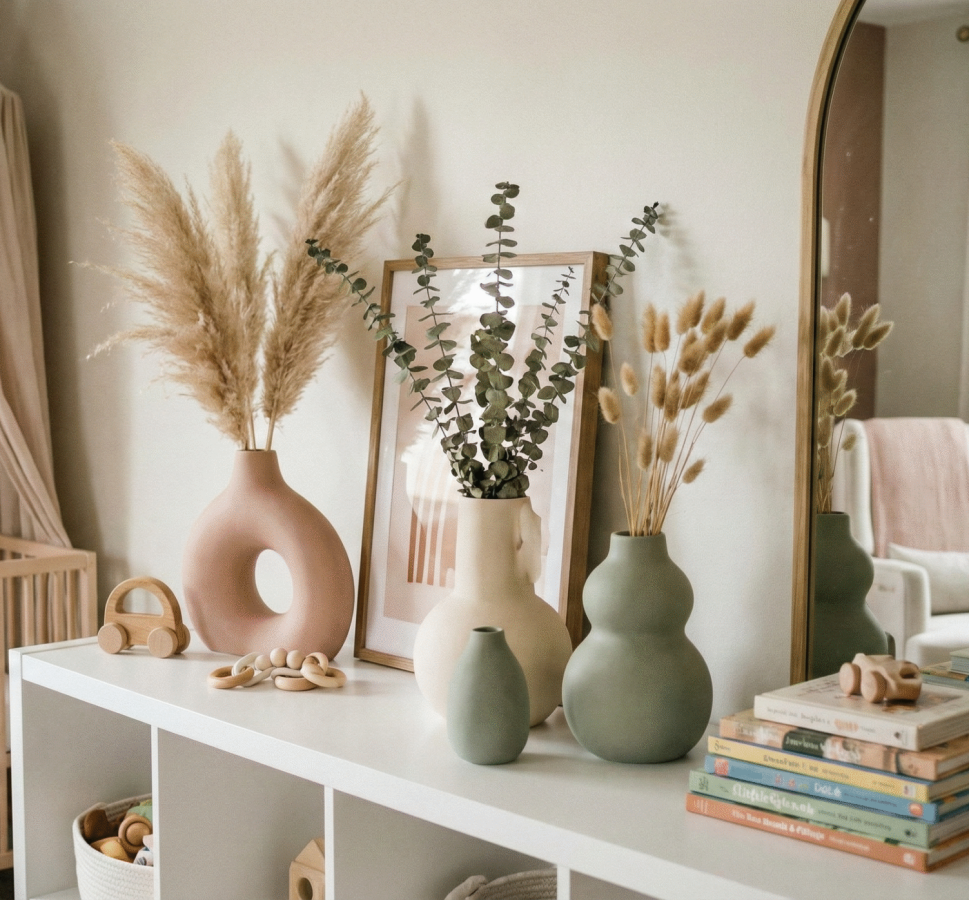
Creating the perfect nursery involves balancing aesthetics with functionality, and few decorative elements achieve this as elegantly as carefully styled vases. Whether you prefer minimalist designs or bohemian charm, incorporating vases into your baby’s room can transform the space from ordinary to extraordinary. This comprehensive guide will walk you through everything you need to know about styling vases in your nursery like a professional interior designer, ensuring your little one’s room is both beautiful and safe.
Styling Vases in Your Nursery: Understanding the Role of Vases in Nursery Design
Vases serve multiple purposes in nursery decor beyond simply holding flowers. They act as sculptural elements that draw the eye, create visual interest, and contribute to the overall theme of the room. When thoughtfully selected and positioned, vases can anchor a bookshelf display, add height to a changing table arrangement, or serve as a standalone statement piece on a dresser. The key lies in understanding how these versatile decorative objects interact with other elements in the nursery environment.
Professional nursery designers often use vases to introduce texture, color, and organic shapes into spaces that might otherwise feel too structured. A ceramic vase with a matte finish can soften the appearance of a modern nursery, while a glass vase filled with dried botanicals brings natural elements indoors. Understanding these dynamics helps parents make informed decisions about which vases will best complement their nursery vision.
Safety First: Choosing Baby-Safe Vases
Before diving into styling techniques, it is crucial to address safety considerations. Nurseries are spaces where babies will eventually become mobile, curious toddlers who love to explore their surroundings. Therefore, every decorative element, including vases, must be evaluated through a safety lens.
Opt for lightweight materials such as silicone, soft plastic, or unbreakable ceramic alternatives for vases placed within a child’s potential reach. Glass and traditional ceramics, while beautiful, should be reserved for high shelves or secured display areas that growing children cannot access. Additionally, consider the shape and stability of each vase. Wide-bottomed designs are less likely to topple than tall, narrow options, making them safer choices for nursery settings.
When using vases with fresh flowers, avoid toxic plant varieties such as lilies, daffodils, or chrysanthemums. Instead, choose baby-safe options like roses, sunflowers, or snapdragons. Better yet, consider using artificial flowers or dried botanicals that eliminate water spillage risks and require no maintenance while still providing visual appeal.
Selecting the Perfect Vases for Your Nursery Theme
1 Modern and Minimalist Nurseries
For contemporary nursery designs, sleek geometric vases in neutral tones work exceptionally well. Think cylindrical shapes in white, cream, or soft gray that complement clean lines and uncluttered spaces. Matte finishes add sophistication without overwhelming the room’s aesthetic. A single large statement vase can be more impactful than multiple smaller pieces in minimalist settings.
2 Bohemian and Natural Nurseries
Bohemian-inspired nurseries call for earthy, textured vases that celebrate natural materials. Terracotta, rattan-wrapped glass, and hand-thrown pottery pieces bring warmth and authenticity to these spaces. Mixing different heights, shapes, and textures creates the collected-over-time look that defines boho style. Pampas grass, dried eucalyptus, and cotton stems make perfect companions for these organic vessels.
3 Classic and Traditional Nurseries
Traditional nursery designs pair beautifully with elegant ceramic vases featuring subtle patterns or delicate details. Soft pastels, classic white, and gentle floral motifs complement timeless furniture pieces. Consider vintage-inspired milk glass vases or Delft-style blue and white pieces for an heirloom quality that will grow with your child.
Styling Vases in Your Nursery: Strategic Placement Techniques
Where you place your vases matters as much as the vases themselves. Professional designers follow specific placement strategies to maximize visual impact while maintaining safety and functionality.
Floating shelves offer excellent opportunities for vase displays, especially when mounted at adult eye level or higher. Create vignettes by grouping vases with other decorative objects like books, small plants, and picture frames. The rule of three applies here: odd-numbered groupings tend to be more visually pleasing than even arrangements.
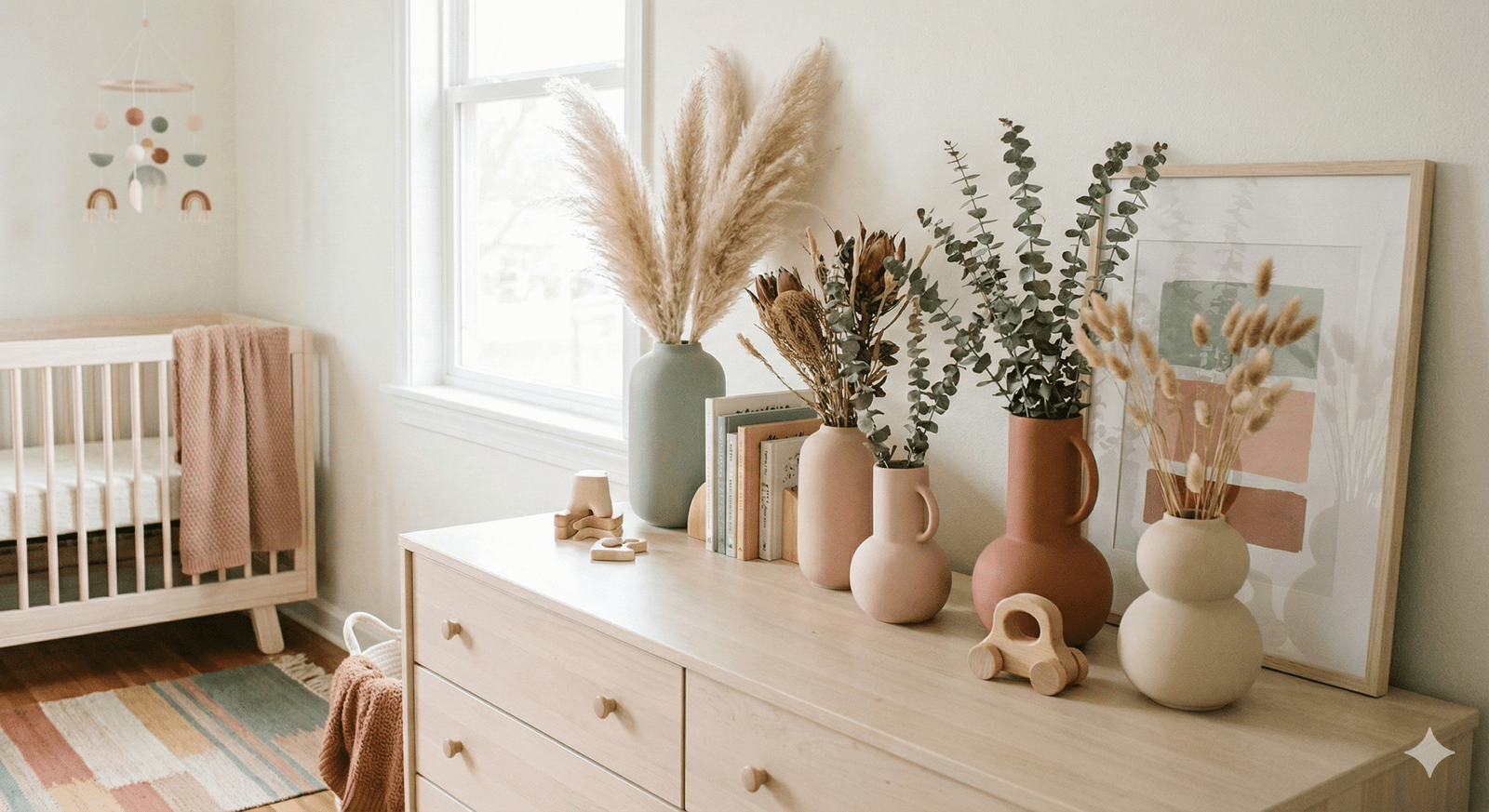
Dressers and changing tables provide surface area for larger vase arrangements. Position vases toward the back of these surfaces, leaving functional space in front while still adding decorative interest. A single tall vase with dried branches can add vertical dimension without taking up excessive surface area.
Window sills, when wide enough, can host small bud vases that catch natural light. However, ensure these are secured or weighted to prevent accidents when windows are opened or curtains are drawn. The interplay of light through glass vases can create beautiful effects during different times of day.
Styling Vases in Your Nursery
Color Coordination and Visual Harmony
Successful vase styling requires thoughtful color coordination with the existing nursery palette. Begin by identifying the dominant colors in your nursery, including wall color, furniture finishes, textiles, and accent pieces. Your vases should complement rather than compete with these established elements.
Neutral vases in white, cream, gray, or black work universally and allow flexibility when changing out seasonal botanicals or updating the room’s accent colors as your child grows. These timeless choices also photograph well for those precious nursery memories you will want to capture.
For those wanting to add color through vases, choose shades that appear elsewhere in the room to create cohesion. A sage green vase that echoes the color of curtains or a blush pink piece that matches the crib bedding creates intentional design connections that make the space feel professionally curated.
Creating Visual Interest Through Variety
Professional designers rarely use identical vases in their displays. Instead, they create interest through thoughtful variety in height, shape, and texture while maintaining a cohesive overall look. This approach prevents monotony and adds depth to your nursery decor.
When grouping multiple vases, vary the heights significantly. A tall floor vase, a medium tabletop piece, and small bud vases create a dynamic display that guides the eye through the space. Combine smooth surfaces with textured ones, mixing glazed ceramics with matte finishes or woven materials.
Shape variation is equally important. Round vases paired with angular ones create visual tension that keeps displays interesting. A sphere-shaped vase next to a rectangular or cylindrical piece demonstrates intentional design thinking that elevates the entire room.
Styling Vases in Your Nursery: Seasonal Styling Updates
One advantage of using vases in nursery decor is the ability to update their contents seasonally without purchasing new decorative pieces. This approach keeps the nursery feeling fresh and allows you to introduce seasonal elements throughout the year.
Spring arrangements might feature faux cherry blossoms or fresh tulips in pastel hues. Summer calls for bright sunflowers or greenery that brings outdoor freshness inside. Autumn invites dried wheat stems, preserved leaves, and warm-toned botanicals. Winter displays could include pine branches, cotton stems, or elegant bare branches painted white.
These seasonal updates teach children about the changing year while keeping the nursery environment dynamic and engaging. As your child grows, they may even enjoy helping select seasonal elements, turning decorating into a learning experience.
Styling Vases in Your Nursery: Budget-Friendly DIY Vase Ideas
Creating custom vases for your nursery does not require a large budget. Many beautiful and unique pieces can be made at home with simple supplies and basic crafting skills.
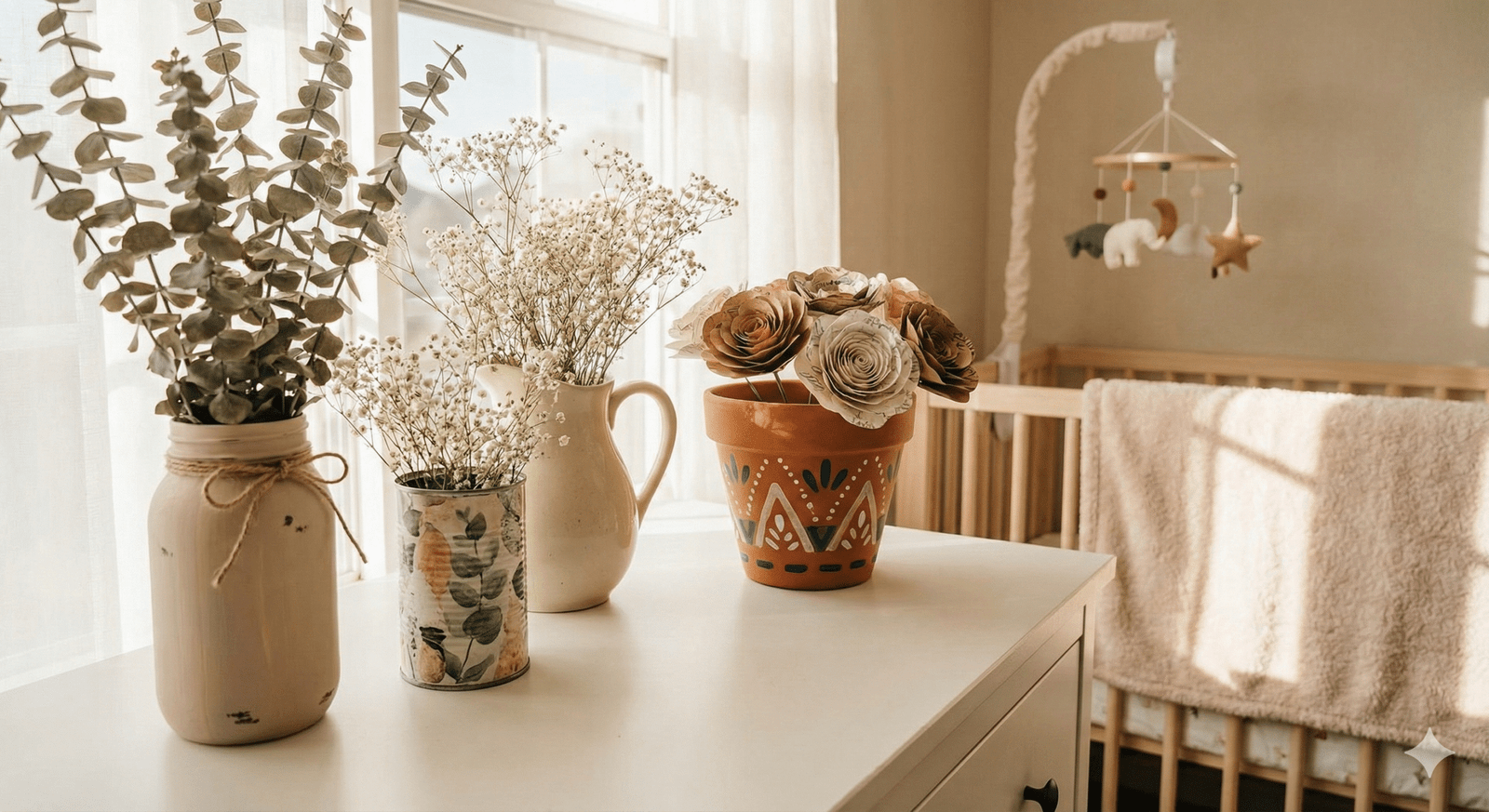
Upcycled glass jars and bottles can be transformed with chalk paint, wrapped in twine or fabric, or decorated with removable vinyl decals. These personalized pieces add character while allowing you to match your exact color scheme. Thrift store finds often yield vintage vases that need only a good cleaning to shine in your nursery.
Air-dry clay allows crafty parents to create custom vase shapes and textures. Even simple coil or pinch pot techniques yield charming handmade pieces that become meaningful additions to your baby’s space. These one-of-a-kind creations often become treasured keepsakes as children grow.
Styling Vases in Your Nursery: Maintenance and Longevity Tips
Proper maintenance ensures your nursery vases remain beautiful and safe over time. Regular dusting prevents allergen accumulation, particularly important in spaces where babies sleep. Use a soft microfiber cloth or duster to gently clean vase surfaces weekly.
For vases holding fresh flowers, change water every two to three days and clean vases thoroughly between arrangements to prevent bacterial growth. If using dried botanicals, replace them every six to twelve months or when they begin to shed or appear dusty beyond cleaning.
Inspect vases periodically for chips, cracks, or other damage that could pose safety hazards. Even small imperfections can become sharp edges that might injure curious little fingers as your baby grows into a exploring toddler.
Conclusion
Styling Vases in Your Nursery like a professional is achievable with thoughtful planning and attention to detail. By prioritizing safety, selecting appropriate pieces for your theme, and following strategic placement techniques, you can create a beautifully decorated space that nurtures both your baby and your design aesthetic. Remember that the best nursery decor grows and evolves with your child, and versatile vase displays offer the perfect opportunity for ongoing creativity and personalization. Start with a few key pieces, experiment with arrangements, and trust your instincts. Before long, you will have mastered the art of nursery vase styling like a true design professional.
References
AAP/HealthyChildren.org – Safe Sleep: https://www.healthychildren.org/English/ages-stages/baby/sleep/Pages/a-parents-guide-to-safe-sleep.aspx
CPSC – Nursery Safety: https://www.cpsc.gov/safety-education/safety-guides/kids-and-babies/safe-nursery
Journal of Interior Design (Wiley): https://onlinelibrary.wiley.com/journal/19391668
National Capital Poison Center – Plantas Venenosas: https://www.poison.org/articles/plant
ASID.org: https://www.asid.org/