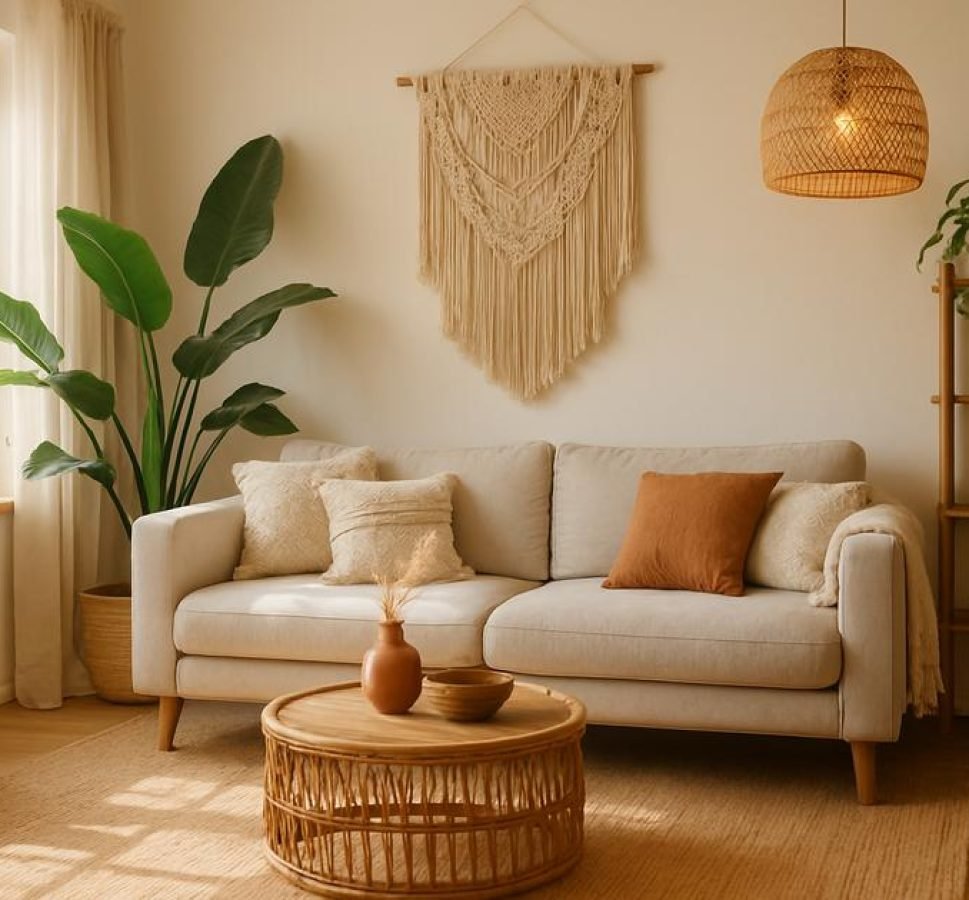
living room area rugs styling can totally change the mood of a space — have you noticed how a single rug pulls everything together? Here I share 11 boho color palettes and quick pairing tips to help you pick hues and textures with less guesswork.
Choosing a boho color palette that complements your rug
Start by identifying the rug’s three color roles: the dominant hue, one or two secondary tones, and a small accent color. Use the dominant color to set the room’s mood, secondaries to build harmony, and accents to add pops that catch the eye.
Pick a base of neutrals—cream, sand, or warm gray—so the rug can stand out without competing. If the rug is bold, keep walls and large furniture neutral. If the rug is subtle, choose one furniture piece to echo a secondary tone.
Balance warm and cool tones. For rugs with terracotta, rust, or mustard, add teal or sage as a cooling counterpoint. For rugs with blues or greens, introduce warm wood tones and brass to keep the space cozy.
Quick palette formulas
- Earthy boho: terracotta + olive + cream + rattan accents
- Sunset mix: mustard + dusty rose + warm beige + dark wood
- Coastal boho: muted teal + sand + soft white + weathered wood
- Monochrome textured: charcoal + light gray + cream + natural fibers
Think in proportions: 60% base (walls, floor), 30% mid-tone (sofa, larger textiles), 10% accents (pillows, art). This 60/30/10 rule keeps the room cohesive and makes the rug a purposeful element rather than an afterthought.
Layer patterns and textures to support the palette. Mix a geometric pillow with a striped throw and a woven basket in complementary colors. Keep at least one element solid to give the eye a place to rest.
When in doubt, test small swatches or use temporary textiles. Move cushions or hang a throw near the rug to see how light and daily use affect color. Small changes often reveal the best final combination.
Mixing textures and patterns for a layered boho look
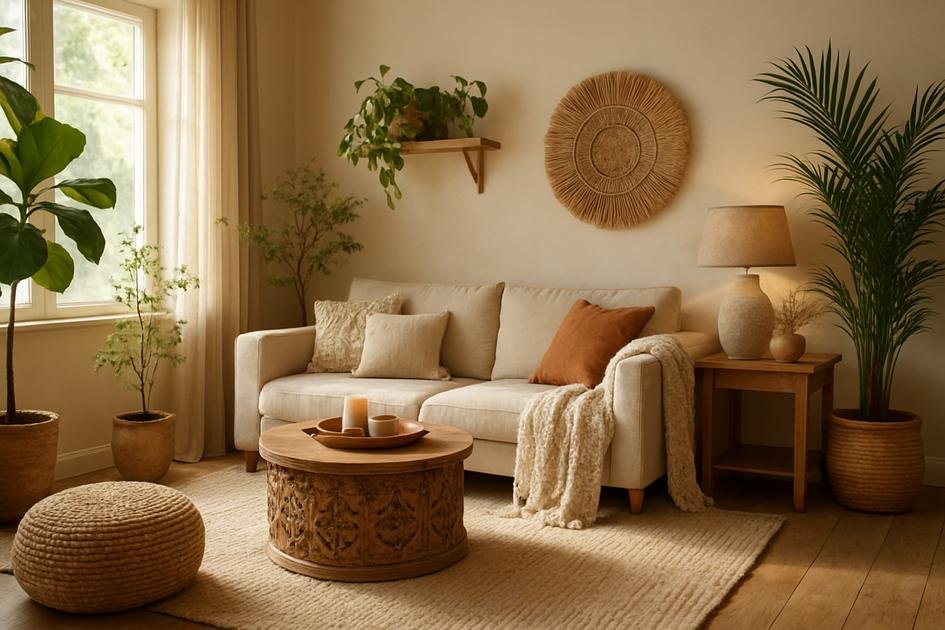
Start by picking one anchor texture—a jute or wool rug—and layer a patterned kilim or flatweave on top. Use a mix of materials like woven rattan, chunky knit throws, linen cushions, and leather accents to create depth without clutter.
Follow the scale rule: combine one large pattern, one medium motif, and one small repeat. This keeps patterns readable. Keep at least one solid element so the eye can rest.
How to combine colors and patterns
Repeat one or two colors from the rug across pillows or a throw to tie the scheme. If the rug is busy, choose simpler pillow patterns in matching tones. If the rug is subtle, pick one bold patterned cushion to add interest.
Mix pattern types: pair a geometric rug with a floral pillow and a striped throw. The contrast makes each pattern stand out while feeling unified when colors repeat.
Practical layering tips
- Place a natural-fiber rug (jute or sisal) as the base and layer a softer patterned rug on top for comfort and contrast.
- Use texture to separate zones: smooth leather chair, nubby wool pouf, and a fringed throw add tactile variety.
- Keep furniture legs on the base rug when possible to anchor the seating area.
- Balance pattern density: if you have a high-contrast rug, choose lower-contrast patterns elsewhere.
Test combinations by moving cushions and throws near the rug to view them in different light. Small swaps often reveal the best mix. Aim for a layered look that feels relaxed, warm, and intentionally assembled.
Using rugs to define zones and balance room color
Use rugs to map out activity areas in an open living room. A rug tells the eye where the seating ends and the dining space begins. This helps rooms feel organized without walls.
Rug sizes and placement
Choose a rug that fits the zone. For seating areas, aim for a rug large enough that at least the front legs of the sofa and chairs sit on it. For dining, a rug should extend beyond the chairs by 24 inches so seats stay on the rug when pulled out. In small nooks, a round or small rectangular rug defines the spot without crowding.
Balancing room color
Let the rug set or support the color story. If the rug is bold, use neutral walls and larger furniture to keep balance. If walls are vivid, pick a simpler rug that repeats one or two colors from the wall so the scheme ties together. Repeat at least one rug color in cushions, throws, or art to create visual links between zones.
Use rugs to soften contrasts. A warm-toned rug can warm cool blue walls; a cool rug can calm a room with many warm wood finishes. Think of rugs as color bridges that move the eye across spaces.
Connect zones with pattern and texture
- Use similar textures across rugs—natural fiber base rugs with softer layered rugs keep a cohesive feel.
- Vary pattern scale: keep one large motif per zone and smaller patterns nearby to avoid visual conflict.
- Use runners to guide flow and anchor pathways in open plans.
When dividing an open-plan room, keep a consistent palette across all rugs. This doesn’t mean identical rugs, but shared tones or accents so the spaces read as parts of one whole.
Practical checks: place furniture on the rug to test scale, tape the rug footprint on the floor to preview, and view the arrangement at different times of day to see how light shifts color. Small swaps—cushions or a lamp—often solve balance issues quickly.
Practical shopping and care tips for long-lasting area rugs
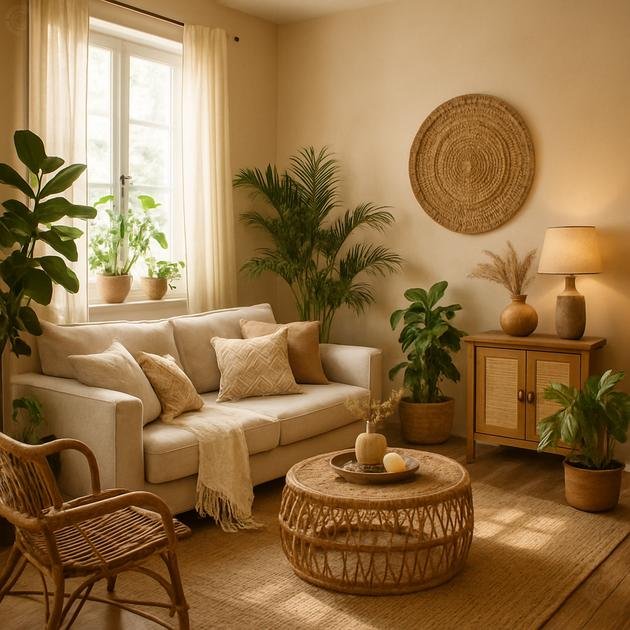
Choose the right fiber first. Wool is durable and cleans well. Flatweaves and kilims resist wear and hide dirt. Jute and sisal are natural but can be rough and stain easily. Synthetic blends (polypropylene, polyester) are budget-friendly and stain resistant for high-traffic areas.
Shopping tips for long life
- Measure the space and add 12–24 inches around furniture for proper scale.
- Request a swatch or bring a pillow to test color and texture in your light.
- Check pile height: low pile is easier to clean; high pile feels cozy but traps dirt.
- Inspect weave and backing—tight weaves last longer than loose tufting.
- Buy a quality rug pad to prevent slipping and reduce wear.
Everyday care routines
Vacuum regularly—at least once a week in busy rooms. Use a gentle setting or a brushless head on delicate rugs. Blot spills immediately with a clean cloth; avoid rubbing. Test any cleaner on a hidden corner first.
- Shake out small rugs outdoors to remove dust.
- Brush fringes gently to keep them tidy.
- Use a soft broom or pet hair tool for fur removal.
Maintenance for longevity
Rotate rugs every 3–6 months so wear evens out. Have high-quality rugs cleaned professionally every 12–18 months, or sooner if heavily soiled. Keep rugs out of direct sun to prevent fading.
For storage, roll rugs with the pile facing inward. Wrap in breathable fabric and store in a cool, dry place. Avoid plastic that traps moisture and invites mildew.
Small fixes save rugs: use furniture cups to avoid permanent dents, repair loose edges quickly, and replace slipping pads when worn. These steps help rugs stay beautiful and functional for years.